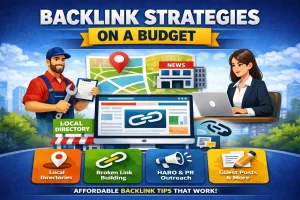
You run a service business. Maybe you’re a plumber in Denver. Maybe you manage an HVAC company in Texas. Maybe you own a digital marketing agency in California. Perhaps you offer cleaning services, lawn care, or home repair.
Here’s the reality: You know that backlinks matter for Google rankings. Every SEO expert you talk to mentions them. Every blog post about ranking higher talks about building a strong backlink profile. Google itself has confirmed multiple times that backlinks are one of their top three ranking factors.
But there’s a problem.
Most backlink strategies assume you have a big budget. They talk about hiring expensive link-building agencies. They mention paying $1,000 to $3,000 per month for professional link acquisition. They discuss buying premium guest posting placements or investing in digital PR campaigns. For a small service business with a limited marketing budget, these options feel completely out of reach.
Many service business owners have told us the same thing: “I know backlinks matter, but I can’t afford the agencies. So I’ve just given up on link building entirely. I’m focusing on content and hope that’s enough.”
Here’s the truth: It’s not enough. And you don’t need expensive agencies to build quality backlinks.
The best backlink strategies for service businesses with low budgets don’t rely on paid links or expensive agencies. They rely on smart strategy, consistent effort, and knowing exactly where to find free or cheap backlink opportunities. Most service business owners simply don’t know these tactics exist.
This guide changes that. We’re going to show you exactly how to build quality backlinks for your service website without spending thousands of dollars. You’ll learn the specific strategies that work in 2026. You’ll get real numbers on time investment and costs. You’ll have a month-by-month action plan you can implement starting this week.
By the end of this guide, you’ll understand that backlinks are completely achievable on a limited budget. You just need the right approach.
Part 1: Understanding Why Backlinks Matter More Than Ever for Service Businesses
Before diving into tactics, let’s establish exactly why backlinks matter for your service business specifically.
Google’s Three Main Ranking Factors
Google has confirmed that it uses hundreds of ranking signals. But the company has been clear about what matters most: content quality, user experience, and links. These are the “Big Three” that influence whether your website ranks on page one or gets buried on page ten.
Content quality matters because Google wants to show users the most helpful, accurate information available. Your service website needs content that actually solves problems for your potential customers. We’ve covered this extensively in our articles about service business SEO and creating link-worthy content.
User experience matters because Google now measures things like page speed, mobile responsiveness, and how easily people can navigate your site. A fast, mobile-friendly website gets better rankings than a slow, clunky site.
Links matter because Google treats backlinks like votes of confidence. When another website links to you, Google interprets that as: “This business is trustworthy. This business has real expertise. Other people in our industry recommend this business.” Multiple quality backlinks signal that your business is legitimate and authoritative.
For service businesses, this is particularly important. When someone searches “best plumber in Denver” or “emergency HVAC service near me,” they’re looking for a business they can trust with their home or their problem. Websites with strong backlinks get shown higher in the results because Google recognizes them as more trustworthy.
The Local Authority Signal
Service businesses have a unique advantage when it comes to backlinks: local authority.
When a local website, a local news outlet, or a local business directory links to your service business, Google recognizes this as a local authority signal. The algorithm thinks: “This local business is recognized and linked to by other local institutions. This suggests real local authority.”
National businesses competing for rankings have to fight for links from national publications. Service businesses can get links from local directories, local news, local sponsorships, and local partnerships. These local links are actually more valuable for service business rankings than national links would be.
More Than Just Rankings
Backlinks do more than just improve your search rankings. They also drive referral traffic directly to your website.
Imagine a customer is browsing a local business directory or reading an article about home improvement. They see a link to your service business. They click it. They visit your website. They become a customer.
This referral traffic is highly valuable because these are people actively looking for what you offer. They’re not random visitors. They came to your site intentionally because they saw a recommendation.
Backlinks also build credibility with potential customers. When someone visits your website and sees that you have multiple links from reputable sources and publications, they think: “This business is established. This business is recognized in the industry. This is a safe choice.”
Part 2: The Critical Difference Between Quality Backlinks and Spammy Backlinks
Not all backlinks are created equal. In fact, Google has become extremely good at detecting low-quality, manipulative backlinks. In 2026, a spammy backlink can actually hurt your rankings instead of help them.
What Makes a Backlink High-Quality
A high-quality backlink comes from a relevant website. If you run a plumbing service, a backlink from a local business directory or a home improvement website is relevant. A backlink from a casino website, an adult website, or an unrelated topic is not relevant. Google evaluates the topic of the linking website and considers whether it makes sense that they would link to you.
A high-quality backlink comes from a website with real traffic and real authority. The linking website needs to have actual visitors and real influence in its niche. Google can measure this. A link from a website that gets 1,000 visitors per month and has been established for five years is much more valuable than a link from a website that gets 50 visitors per month and was created last month.
A high-quality backlink is placed within article content, not hidden in a sidebar or footer. Contextual links—links that appear naturally within an article discussing related topics—signal editorial endorsement. They’re more valuable than sidebar links or footer links that appear on every page of a website.
A high-quality backlink uses natural anchor text. The text around the link should be natural English that sounds like a real person wrote it. “If you need emergency plumbing services in Denver, contact a professional plumber” is natural anchor text. Stuffing keywords like “plumber Denver plumbing services HVAC emergency” is spammy and tells Google someone was trying to manipulate rankings.
A high-quality backlink comes from a trustworthy source. A link from a university website, a government website, a major news publication, or an established industry authority carries much more weight than a link from a random blog. Google evaluates the trustworthiness of the linking website and gives more credit to links from trusted sources.
Red Flags That Signal Spammy Backlinks
You should actively avoid backlinks from certain types of websites. These spammy backlinks can actually hurt your rankings.
Spammy backlinks come from completely irrelevant websites. If you run a plumbing service and get a backlink from a gambling website, that’s not just low-value—it’s suspicious. Google recognizes that the relationship makes no sense.
Spammy backlinks come from low-traffic, low-authority websites. Links from websites with zero real visitors and no domain authority are essentially worthless. They don’t pass value to your site. Worse, when Google sees patterns of you getting links from these low-quality sources, it questions whether you’re engaged in manipulative link-building practices.
Spammy backlinks use exact-match anchor text repeatedly. If every single backlink to your website uses the exact same keyword phrase (like “Denver plumber” or “HVAC contractor”), it looks manipulated. Google recognizes this pattern and downweights these links. Natural anchor text varies widely and includes your company name, generic phrases like “click here,” and different keyword variations.
Spammy backlinks appear in directories of thousands of identical links. Generic directories where every business gets the exact same treatment and exact same link format are low-quality. Google doesn’t value these links highly.
Spammy backlinks appear overnight in bulk. If your website suddenly gets 100 backlinks in a single week, that’s suspicious. Google recognizes this as unnatural link velocity. Real link growth is gradual—a few links here and there over time.
The Simple Rule: Quality Over Quantity
The most important principle in backlink building is this: One quality backlink is worth more than fifty spammy backlinks. Focus exclusively on building quality backlinks. If you have to choose between five spammy links and one quality link, choose the quality link every single time.
Part 3: Seven Free Backlink Strategies That Actually Work
Here are the specific strategies you can implement with little to no money that will genuinely build quality backlinks for your service website.
Strategy 1: Local Business Directory Submissions
The easiest backlinks come from local business directories and business listings. These are free or nearly free to submit your business to, and every submission results in a backlink.
When you submit your business to Google Business Profile, you’re not getting a traditional backlink, but you’re establishing your business on the largest local directory in existence. The real backlinks come from other directories where you can list your business.
Your local chamber of commerce likely maintains a business directory. Local service guides specific to your area have directories of service providers. Industry associations and professional organizations maintain directories of members. Yellow Pages-style websites still exist and allow free or cheap listings. Your municipality or county may maintain a business registry.
Each of these submissions is a backlink to your website. More importantly, these backlinks are completely legitimate. You’re not tricking anyone. You’re simply listing your business in directories where your potential customers actually look. The backlinks come naturally from these legitimate listings.
We recommend identifying 20-30 local and industry-specific directories relevant to your service. Spend a dedicated day or two submitting your business to all of them. Create a spreadsheet with the directory name, your listing URL, and the date submitted. Within one to two weeks, you’ll have 20-30 quality local backlinks without spending more than a few dollars.
Time investment: 8-12 hours total
Cost: $0-$150 depending on premium listings
Backlinks gained: 20-30
Strategy 2: Broken Link Building
Broken link building is one of the most effective free strategies, but it requires more work than directory submissions.
Here’s how it works. Other websites in your industry publish articles about topics relevant to your service. These articles link to external resources. Over time, some of those external links break. The website they linked to no longer exists. The page got deleted. The domain expired. The result is a broken link on their page.
You find these broken links. You create content on your website that’s better than what they originally linked to. You contact the website owner and say something like: “I noticed your article about water heater installation links to a page that no longer exists. I created a comprehensive guide on the same topic. Would you mind updating your link to point to my resource instead?”
Many website owners appreciate this. They get better content for their readers. You get a quality backlink in the process. Everyone wins.
The process takes longer than directory submissions, but broken links are high-quality. They come from established websites with real traffic. They’re editorial links placed within content. The websites linking to you chose to do so because your content is genuinely helpful.
You can find broken links using free tools like Check My Links (a Chrome extension) or Broken Link Checker. Visit websites in your industry. Browse their articles and resource pages. Check for broken links. Create content that would be a better replacement. Reach out and propose the link placement.
This strategy works because you’re offering genuine value. You’re not asking for something for nothing. You’re helping them fix a problem (a broken link) while asking for a reasonable favor in return (a link to your better content).
Time investment: 2-4 weeks to build a pipeline of broken link opportunities and content
Cost: Free
Backlinks gained: 2-5 per month once you get the process going
Strategy 3: Free Tools and Resources That Get Linked Naturally
One of the best ways to get backlinks without asking is to create content so useful that people naturally link to it and share it.
For service businesses, this means creating free tools, calculators, or resources specific to your industry. A plumbing service could create a water pressure calculator or a pipe diameter guide. An HVAC company could create a cooling load estimator or a filter replacement guide. A digital marketing agency could create an SEO grading tool or a website audit checklist.
When you create something genuinely useful, people link to it. Industry websites mention it. Competitors even acknowledge it. Blogs reference your tool. You get backlinks completely naturally without asking.
These links are extremely high-quality because they come from websites that voluntarily chose to link to you. The linking websites found your resource so valuable they wanted to share it with their audience.
The challenge is that useful tools take time or money to build. You might need to hire a developer to create an interactive calculator. You might need to invest 20-30 hours creating a comprehensive guide or checklist. But once the tool is live, it generates backlinks month after month for years.
Time investment: 20-40 hours to create the tool
Cost: $0 if you have the skills to build it, $200-$1,000 if you hire someone
Backlinks gained: 2-10 per month once the tool is established

Strategy 4: Local Sponsorships and Community Involvement
Sponsor a local sports team. Sponsor a charity event. Volunteer with a local nonprofit. Sponsor a local business conference or networking event.
When you sponsor something, the sponsoring organization links to you. You get a backlink. More importantly, you get local visibility and goodwill within your community. You’re not just getting a link—you’re building reputation.
These backlinks are local and relevant. They come from websites with real authority in your local area. They signal to Google that you’re an active, contributing member of your community.
The cost varies. Sponsoring a youth soccer team might cost $300-$500. Sponsoring a charity fundraiser might cost $200-$1,000. The investment is modest, and you get a backlink plus community goodwill plus local visibility.
Time investment: 2-4 hours to research opportunities and complete sponsorship
Cost: $200-$1,000 per sponsorship
Backlinks gained: 1-3 per sponsorship
Strategy 5: Local Resource Page Outreach
Many local websites maintain “resource pages” of local businesses and services in their community. These pages list “Best businesses in [City]” or “[City] service providers” or “[City] resources.”
These pages often link to local service businesses. You can get your business listed and earn a backlink.
Identify local resource pages relevant to your area and service type. Contact the website owner. Request that your business be added to their resource page. Many will happily add you because they want their resource page to be comprehensive and helpful.
This is one of the easiest outreach strategies. You’re not asking for anything unusual. You’re asking to be included in a list of local service providers. Many website owners will say yes immediately.
Time investment: 2-3 hours to find local resource pages and do outreach
Cost: Free
Backlinks gained: 3-8 depending on how many resource pages your area has
Strategy 6: Industry Forum Participation
Join industry forums, communities, and discussion groups relevant to your service type. Spend time helping people. Answer questions. Provide expert advice.
When you consistently provide valuable answers and build a reputation as an expert, people notice. They mention your business. They link to your website. They refer customers to you.
This strategy takes time to show results, but it builds genuine relationships and authority in your industry. You’re not asking for links—links come naturally as people recognize your expertise.
Participate in Reddit communities related to your service. Join Facebook groups for your industry. Answer questions on Quora. Participate in LinkedIn industry groups. Help people. Be generous with your expertise.
Time investment: 30 minutes daily for 2-3 months before you see backlink results
Cost: Free
Backlinks gained: 1-3 per month once you’re established as an expert
Strategy 7: HARO (Help A Reporter Out)
HARO is a free service that connects journalists writing articles with expert sources. Journalists post queries asking for expert comments on topics. You respond to relevant queries with your expertise. They interview you. They publish the article with a link to your website.
Sign up for HARO. Every day, you get an email with journalist queries. Browse them. Respond to ones relevant to your service. If the journalist uses your quote or interview, they’ll link back to your website in the article.
This strategy is valuable because journalists are writing articles that get published in major outlets and websites. Those articles have authority. The links come from established publications.
The success rate isn’t 100 percent. Not every query you respond to results in an interview. Not every interview results in publication. But when it works, you get links from high-authority sources.
Time investment: 10-15 minutes daily to review and respond to queries
Cost: Free
Backlinks gained: 1-3 per month depending on response rate and publication
Part 4: Low-Cost Strategies Under $500
If you have a small budget to allocate to backlinks, these strategies offer excellent return on investment.
Strategy 1: Guest Posting on Industry Websites
Guest posting is writing an article for another website and getting a backlink in return. Unlike generic directory submissions, guest posts are real content that demonstrates expertise.
You write an article about a topic relevant to your service. Another website publishes it. You get a backlink and the opportunity to reach their audience.
Finding guest posting opportunities takes work. You need to identify websites in your industry that accept guest posts. Look for “write for us” pages. Check their author bios to see if they publish guest contributors. Contact website owners directly with relevant article ideas.
When pitching, be specific. Don’t send generic pitches to 100 websites. Send personalized pitches to 10-15 websites explaining why your article idea is perfect for their specific audience.
Time investment: 1-3 weeks to pitch, write, and publish 2-3 guest posts
Cost: Free if you write them yourself, $100-$300 if you hire a writer
Backlinks gained: 2-3 per month
Strategy 2: Niche Edits (Affordable Link Placements)
Niche edits are links added to existing, established articles on websites. A service finds an article on a relevant website. They add a sentence mentioning your business with a backlink. Your link is placed in content that already has traffic and authority.
This is different from creating new content. It’s adding your link to existing popular content. The article already ranks. The article already has visitors. Your link is just added to it.
Reputable services like Getlinks, Outbound, or NicheLink offer niche edits. You specify your niche and the sites you want placements on. They handle finding relevant articles and getting your link placed.
Cost varies. Budget $50-$200 per link. For $200-$400, you can get 2-4 high-quality placements.
Time investment: 2-3 hours to communicate your requirements and review placements
Cost: $50-$200 per link
Backlinks gained: 2-4 for a $200-$400 investment
Strategy 3: Local News and Press Releases
When something newsworthy happens with your business, issue a press release. Opened a new location. Won an award. Hired a specialist. Sponsored a community event. Donated to charity.
Local news outlets pick up these stories. They write articles mentioning your business. They link to your website. You get backlinks plus local media coverage.
Distribute press releases through your local press release service or contact local journalists directly. The cost is minimal ($50-$200 for distribution), and when it works, you get backlinks from news publications.
Time investment: 2-3 hours to write the press release
Cost: $50-$200 for distribution
Backlinks gained: 1-3 depending on news pickup
Part 5: Creating Your Systematic Backlink-Building Plan
To succeed with backlinks long-term, you need a system. Random efforts get random results. A systematic approach builds momentum.
Step 1: Identify Your Target Backlink Sources
Create a spreadsheet listing websites and directories where you want backlinks. Include local directories, industry directories, local news outlets, local sponsorship opportunities, industry websites, and competitor websites.
For each potential backlink source, note the type of backlink available, difficulty level, and contact method. This becomes your target list.
You might end up with 30-50 potential backlink sources. Don’t try to tackle all of them at once. Prioritize them by difficulty and likelihood of success.
Step 2: Prioritize by Effort and Value
Easy wins are worth doing first. Local directories take minimal effort and provide immediate backlinks. They have high certainty and low effort.
Medium-difficulty opportunities require more work but offer good value. Guest posting, broken link building, and local sponsorships fall in this category.
Hard wins take significant effort but offer high-quality results. Major news coverage, high-authority site features, and competitive placements take the most work.
Start with easy wins to build momentum. This gives you quick results and builds confidence. Move to medium-difficulty opportunities. Save the hardest opportunities for later.
Step 3: Create a Monthly Action Plan
Design a realistic monthly backlink-building plan that you can sustain.
Month 1 might focus on directory submissions. Submit to 20-30 directories. Build your foundation. Target: 25-30 backlinks.
Month 2 might focus on broken link building and forum participation. Identify 5-10 broken link opportunities. Create content to replace them. Reach out to site owners. Spend 30 minutes daily in industry forums. Target: 5-10 backlinks from broken links plus 1-3 from forum activity.
Month 3 might focus on guest posting and HARO. Pitch 5-10 guest post ideas. Start responding to HARO queries daily. Target: 2-3 guest post backlinks plus 2-3 from HARO.
Month 4 might include one sponsorship, niche edits, and press release outreach. Target: 3-5 backlinks.
This realistic approach builds 40-60+ backlinks in four months without overwhelming your schedule or budget.
Step 4: Track Everything
Use Google Search Console and free tools like Ahrefs to monitor your backlinks. Track new backlinks monthly. Note which strategies are producing results. Identify toxic backlinks you need to disavow.
This data tells you what’s working. Double down on successful strategies. Phase out strategies that aren’t producing results.
Step 5: Avoid Common Mistakes
Don’t buy cheap backlinks from Fiverr or random websites promising bulk links. These are always spammy and will hurt your rankings.
Don’t participate in link exchanges where you link to someone if they link to you. Google hates these artificial relationships.
Don’t use automated outreach for link building. Personalized, genuine outreach gets better response rates.
Don’t ignore relevance. A backlink from an irrelevant website is worthless or harmful.
Don’t expect immediate results. Backlinks take time for Google to discover and evaluate. Be patient.
Part 6: Understanding Your Backlink Timeline
When will you see ranking improvements from your backlink efforts? Here’s a realistic timeline for service websites.
Months 1-2: Building Foundation
In the first two months, you’re building your backlink foundation. You’ll get your first 20-30 backlinks from directories and easy sources. You might get a few more from broken link building or broken link outreach, but you’re not at scale yet.
You won’t see ranking improvements yet. Your domain authority hasn’t increased noticeably. Google is still evaluating your site. But you’re laying groundwork that will pay off.
Months 3-4: Early Momentum
By month three or four, you have 40-60 total backlinks from multiple sources. Your domain authority starts increasing. Google’s evaluation of your site shifts. You start seeing ranking improvements, particularly for less competitive keywords.
Pages that ranked on position 8-10 (page 2-3) might move to position 4-6 (page 1). You’re starting to see organic traffic increases. Keywords that had zero traffic now bring a few visits per week.
Months 5-6: Compounding Growth
By month five or six, you have 60-100+ backlinks. Your domain authority has increased noticeably. Your site’s authority in local search is evident. You’re ranking for multiple keywords. Organic traffic is consistent and growing.
You might see a page-one ranking for a moderately competitive keyword. Traffic is increasing 20-30 percent month-over-month.
Months 7-12: Established Authority
After six to twelve months of consistent backlink building, you have built a genuinely strong backlink profile. You have 100-150+ quality backlinks. Your domain authority is solid. You rank for multiple keywords. Organic traffic is substantial.
Articles that seemed impossible to rank initially are now on page one. Some might be in top three. You’re getting dozens of organic sessions per week. These are converting into genuine customer inquiries.
The timeline depends on competition. In less competitive local markets, you’ll see results faster. In highly competitive markets, it takes longer. But the formula works: consistent backlink building plus quality content equals improved rankings.
Part 7: Comprehensive Comparison Table of All Strategies
Here’s a quick reference comparing all the backlink strategies discussed:
| Strategy | Time Required | Cost | Backlinks/Month | Difficulty | Quality | Long-term Value |
|---|---|---|---|---|---|---|
| Local Directories | 1-2 weeks | Free-$150 | 20-30 (upfront) | Very Easy | Good | High |
| Broken Link Building | 2-4 weeks | Free | 2-5 | Easy | Very High | Very High |
| Free Tools/Content | 20-40 hours | Free-$1K | 2-10 | Easy | Very High | Very High |
| Local Sponsorships | 1-2 weeks | $200-$1K | 1-3 | Easy | High | High |
| Resource Page Outreach | 2-3 hours | Free | 2-4 | Very Easy | Good | Medium |
| Forum Participation | Ongoing | Free | 1-3 | Medium | Good | High |
| HARO | 10-15 min daily | Free | 1-3 | Medium | Very High | High |
| Guest Posting | 1-3 weeks | Free-$300 | 1 | Medium | Very High | Very High |
| Niche Edits | 2-3 hours | $50-$200 | 1 | Medium | High | Medium |
| Press Releases | 2-3 hours | $50-$200 | 1-3 | Medium | High | Medium |
Part 8: Frequently Asked Questions About Backlinks for Service Websites
Q: How many backlinks do I actually need to rank on Google for my service business?
A: It depends on how competitive your market is. For low-competition local keywords, 10-20 quality backlinks can get you on page one. For moderately competitive keywords, you might need 40-80 backlinks. Highly competitive keywords might require 100+ backlinks. Quality matters more than quantity. Five excellent backlinks from relevant authority sites outweigh fifty mediocre directory links.
Q: Is it safe to buy backlinks, or will Google penalize me?
A: Avoid buying backlinks from cheap sources. They’re usually spammy and can hurt your rankings or trigger penalties. If you buy backlinks, use only reputable services that focus on quality placements. Even then, earned backlinks are safer and work better long-term. The strategies in this guide are safer and often more cost-effective.
Q: How long before I see ranking improvements from my backlink efforts?
A: Usually 6-12 weeks for initial results. Google takes time to discover new backlinks. It takes more time to evaluate and factor them into rankings. Patience is essential. By month three to four, you should see initial ranking improvements for less competitive keywords. By month six to twelve, you’ll see more significant improvements.
Q: Are nofollow backlinks worth building? Do they help SEO?
A: Nofollow links don’t pass direct SEO value like dofollow links do. However, they still drive referral traffic. They still build brand awareness. They signal that your business is mentioned and recognized. Building only dofollow links is ideal, but a mix of dofollow and nofollow links is natural and acceptable.
Q: What’s the fastest way to get backlinks if I have limited time but some budget?
A: Combination approach: Spend one day submitting to 20 local directories (free, quick results). Invest $200-$400 in 3-4 niche edits from reputable services (fast, quality results). Spend 10 minutes daily on HARO for 2-3 months (slow but high-quality results). This combination gives you 30-40+ backlinks in three months with moderate time investment.
Q: How do I know if a backlink is actually quality, or if it’s spammy?
A: Check the linking website. Does it have real organic traffic (use Ahrefs free tool or similar)? Does it rank in Google for relevant keywords? Is it relevant to your service? Is the link placed contextually within content or hidden in sidebar? Can you verify the website is real and established? Does the link use natural anchor text? If yes to most of these questions, it’s quality. If no to several, it’s probably spammy.
Q: Should I hire a link-building agency, or can I do this myself?
A: You can absolutely do this yourself using the free and low-cost strategies in this guide. If you have limited time or prefer delegating, hiring is an option. Look for agencies specializing in white-hat, manual outreach rather than bulk automated services. Quality matters more than volume. For most service businesses starting out, DIY is the right approach. You’ll save money and learn what works for your business.
Q: What do I do if I discover spammy backlinks pointing to my site?
A: Use Google Search Console to find spammy backlinks. Review each one. If it’s obviously spam, contact the linking website and request removal. If they don’t respond, use Google Search Console’s disavow tool to tell Google to ignore that link. Don’t overuse the disavow tool—only use it for obvious spam.
Q: Is link building harder for local service businesses than national brands?
A: Actually, it’s easier for local service businesses. You have more opportunities because you can target local directories, local sponsorships, local news, and community involvement. Local links are actually highly valuable for local search. National brands compete with other national giants for big-publication links. Local is your advantage. Use it.
Q: How should I prioritize between doing free backlink strategies versus paying for some services?
A: Start with free strategies. Build 30-50 backlinks using free and low-cost methods. This builds momentum and requires no budget. Once you have foundation backlinks, investing $200-$500 in niche edits or guest posting can accelerate results. Don’t spend big money before you’ve proven the concept works for your business.
Conclusion: Your Action Plan for This Week
Backlinks are essential for ranking your service website on Google. The good news is you don’t need expensive agencies or massive budgets to build them.
Here’s exactly what to do this week:
By end of this week: Identify 20-30 local and industry directories relevant to your service. Spend 8-10 hours submitting your business to all of them. You’ll have 20-30 backlinks before you know it.
Next week: Sign up for HARO. Spend 10 minutes daily responding to relevant journalist queries. Find 5-10 broken links on competitor or industry websites. Create content to replace them. Start outreach.
Month 2: Guest post on 2-3 industry websites. Join 3 industry forums and spend 30 minutes daily helping people. Sponsor one local event or organization.
Month 3 onward: Continue monthly activities. Track results. Double down on what works. Scale the strategies producing best results for your business.
By following this plan, you’ll have 40-60+ quality backlinks within four months. Your rankings will improve. Your organic traffic will increase. You’ll get genuine customer inquiries from search.
Your competitors probably aren’t doing this. Most service businesses ignore backlinks entirely because they think it’s too expensive or too complicated. That’s your competitive advantage. While they do nothing, you’re systematically building authority.
Ready to accelerate your backlink strategy and dominate local search rankings? Contact Elite SEO Rankers for a free consultation. We help service businesses build comprehensive backlink strategies tailored to their budget and competition level. Our team knows exactly which strategies work best for different service industries. Whether you run a plumbing company, HVAC service, digital marketing agency, or any service business, we’ve built winning backlink strategies for similar companies.
Learn more about our local SEO services and how we combine backlinks with topical authority and content strategy to create a complete ranking system. You can also explore our SEO services for a comprehensive approach to improving your organic visibility.